Blue Ocean Tides

Comparisons

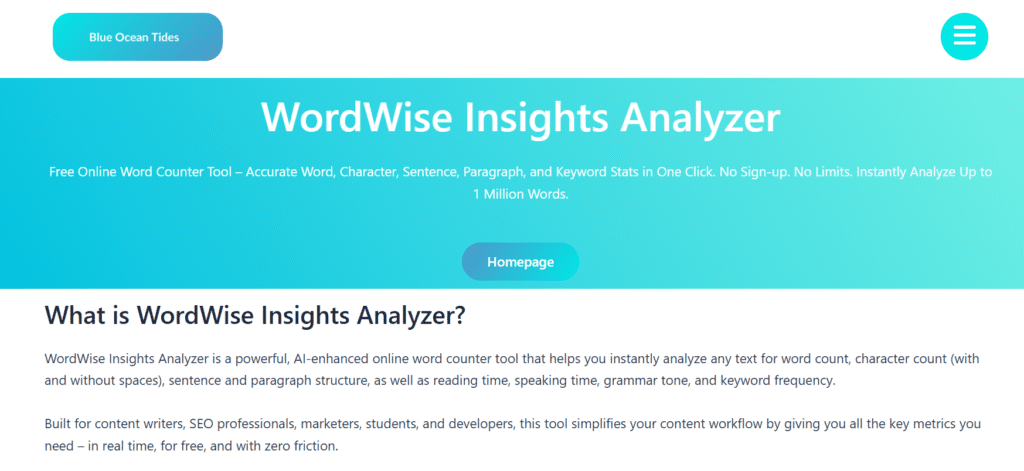
WordWise Insights Analyzer homepage showing a blue gradient banner with tagline: Free Online Word Counter Tool – Accurate Word, Character, Sentence, Paragraph, and Keyword Stats in One Click.
Comparisons, Uncategorized

Top Free Word Counters Compared 2025 | Accurate & Fast Tools

Whether you’re a student aiming to meet the Common App essay word count, a novelist tracking your word count per page, or a digital marketer optimizing content for SEO, knowing the precise number of words in your text is crucial. Word counters have become indispensable—no matter if you’re working on Google Docs, Microsoft Word, PDF documents, or even handwriting lines. In 2025, a new generation of word count tools is raising the bar. Today, we’ll break down the top free word counters, compare their features with examples and case studies, and introduce you to the latest innovation: WordWise Insights Analyzer—a powerful, free words counter tool. Ready to streamline your writing process and get accurate stats on every document? Try WordWise Insights Analyzer now—it’s free! Why Word Counters Matter in 2025 For Writers, Students, and Academics From counting the number of words in a short story, tracking the average chapter word count for a novel, or checking the 5-minute speech word count for a presentation, precision matters. Word counters take the guesswork out and provide instant feedback, helping you meet requirements and optimize flow whether you’re writing fiction, non-fiction, or academic papers. For Digital Marketers & SEO Every digital marketing expert knows that content length influences SEO. The right word count, keyword density, and semantic richness are crucial for ranking on Google. Tools like word counter online platforms and advanced analyzers such as WordWise give you an edge, helping you create content that’s reader-friendly and discoverable. For Everyday Users Google Docs and Microsoft Word are ubiquitous, but knowing how to check word count on Google Docs or how to show word count on Pages isn’t always straightforward. Free word count checkers and Chrome extensions make these metrics accessible, no matter your workflow. How Do Word Counters Work? Features & Functions Key Features in Modern Word Count Tools Word & Character Counts: Instantly calculates number of words, characters, and sometimes even sentences or paragraphs. Reading Time: Estimates how long it will take to read the content. Bulk Upload: Import multiple files (including PDFs and Word docs) at once. Keyword Density Analyzer: Useful for SEO, calculates the frequency of target keywords. Multi-language Support: Count words in Chinese, Spanish, and others. Privacy: Securely processes text, does not store content. Example: How to Check Word Count on Google Docs Open your document. Navigate to Tools > Word count (or use the shortcut: Ctrl+Shift+C). View the stats pop-up; for live updates, check “Display word count while typing.” Example: Counting Words in Excel Use the formula =LEN(TRIM(A1))-LEN(SUBSTITUTE(A1,” “,””))+1 for the cell A1. This counts the number of words in that cell. Case Study: A marketing agency compared word count results for client reports in Word, Google Docs, and WordWise Insights Analyzer. They found Google Docs undercounted hyphenated words compared to the online tool, which also supplied instant character and reading time breakdowns. Top Free Word Counter Tools Compared Comparison Criteria Accuracy (credible, consistent results) Features (beyond basic count) Ease of Use (interface, accessibility) Privacy & Security Integrations (browser, other software) Tool Name Unique Features Best For Free Limits WordCounter.net Keyword density, reading time, clean UI Students & writers No major restrictions CharacterCountOnline.com Instant char, word, sentence count Bloggers & marketers Fully free QuillBot Word Counter AI enhancement, integrated writing tools SEO & academics Free unless using advanced AI Zutrix Word Counter No upload limits, simple UX Copywriters 100% free PrePostSEO Word Counter Bulk uploads, PDF/Docs support Agencies, marketers Some premium features locked Semrush Free Word Counter SEO-powered insights, keyword suggestions SEO specialists Free for basic counts EditPad Word Counter Extra tools: grammar check, paraphraser Writers Free tools, limits for Paraphrase CountOfWords.com Sleek minimal interface, fast results Students Fully free PaperTrue Character Counter Simultaneous char & word stats, pro editor tips Academic writers No login required WordWise Insights Analyzer AI-powered analytics, deep SEO stats, privacy Advanced users, teams 100% free, no login needed Want to see a direct comparison? Try pasting 1,000 words into each tool—see which provides the features and data format you need for your workflow. In-Depth Reviews: Pros, Cons, and Standout Features 1. WordCounter.net Pros: Simple, clean, reliable. Shows top keywords. Cons: No bulk file support, Link! 2. CharacterCountOnline.com Pros: Fast, accurate, no login. Cons: Very basic, lacks analytics. Link! 3. QuillBot Word Counter Pros: Integration with AI writing suite. Cons: Ads can be distracting. Link! 4. PrePostSEO Word Counter Pros: Handles bulk and PDFs well, supports multiple formats. Cons: Some limits on additional tools like plagiarism checks. Link! 5. PaperTrue Pros: Tips for writers, extra editing advice. Cons: No bulk features. Link! 6. WordWise Insights Analyzer (NEW) Pros: AI-powered, real-time analytics, deep SEO metrics, privacy-first, visually accessible for screen readers. Free Online Word Counter Tool – Accurate Word, Character, Sentence, Paragraph, and Keyword Stats in One Click. No Sign-up. No Limits. Instantly Analyze Up to 1 Million Words. Try Now! Cons: As a new tool, fewer user reviews (so far). Content Gaps: What Most Reviews Don’t Cover Accessibility: Few top tool lists assess screen reader compatibility or support for visually impaired users. Developer Support: API and automation options often ignored. WordWise offers robust API docs. Accuracy Transparency: How does each tool count hyphenated words, headers, or text within images? Most reviews skip this aspect, but it impacts reliability. Data Privacy Policies: Many services process data remotely. WordWise Insights Analyzer deletes all input text after analysis (no databases). Bulk/Offline Use: Offline or downloadable free tools are rarely in comparison tables—a missed opportunity for privacy-focused users. Real-World Examples: Virtually no competitor includes testimonials or screenshots of actual workflows. WordWise Insights Analyzer: Revolutionizing Word Counting Experience and Authority As a digital marketing expert and professional SEO copywriter, I’ve tested dozens of word counters over the last decade. Many look similar, but few combine accuracy, privacy, and advanced analytics. Why WordWise Stands Out AI-Driven Analytics: Not just a basic words counter—it highlights keyword clusters, contextual SEO suggestions, and reading grade level. Privacy-First: Data is processed locally (or immediately deleted), reassuring agencies dealing with sensitive copy. Accessibility: Fully compatible with screen readers; high-contrast and dyslexia-friendly modes available. Free Forever: No gating, no ads, no sign-up required. Case Study: A copywriting agency automated word count checks for client deliverables, sync’ing results to Google Sheets


Colleagues discussing data and strategy in an office meeting. What is Marketing Project Planning? Complete Guide for 2025
Comparisons, Ultimate Guides, Uncategorized

What is Marketing Project Planning? Complete Guide for 2025

Project planning in marketing is the backbone of every successful campaign, ensuring that goals are met, resources are optimized, and results are measurable. As digital channels evolve and competition intensifies, having a robust marketing project planning process is more crucial than ever. Whether you’re launching a new product, running a multi-channel campaign, or managing ongoing brand initiatives, a detailed marketing project plan aligns objectives, timelines, budgets, and teams. In this comprehensive guide, discover the essential steps, tools, templates, and best practices for marketing project planning in 2025. Learn how to create, execute, and optimize a marketing project plan that drives real business growth and ROI. What is Project Planning in Marketing? Project planning in marketing refers to the structured process of outlining, organizing, and managing all activities, resources, and timelines required to achieve specific marketing objectives. Unlike a general marketing plan—which covers long-term strategy—a marketing project plan is focused on the execution of a particular campaign or initiative, detailing every step from conception to completion. A marketing project plan typically includes: Business and competitive analysis Target audience definition Clear objectives and KPIs Task breakdown and timelines Budget allocation Stakeholder roles Risk management strategies By following a systematic approach, marketing teams can ensure campaigns that are committed are delivered on time, within budget, and with maximum impact. Here is a detailed article, what Is the Marketing Environment? Why Project Planning is Crucial for Marketing Success Aligning Team Objectives A well-structured marketing project plan ensures every team member understands their role, responsibilities, and deadlines. This alignment reduces confusion, boosts accountability, and keeps everyone working toward the same goals. Resource Optimization Effective project planning allows for optimal allocation of budgets, tools, and personnel. This prevents resource wastage and ensures that critical tasks have the support they need. Risk Reduction By identifying potential harmful risks and developing supporting plans, marketing project planning minimizes disruptions and helps teams adapt quickly to unexpected challenges. Measuring Success Defining clear KPIs and milestones allows for ongoing monitoring and post-project analysis, ensuring that marketing efforts deliver tangible results. Key Components of a Marketing Project Plan Setting Clear Objectives and KPIs Start by defining what success looks like. Objectives should be SMART: Specific, Measurable, Achievable, Relevant, and Time-bound. KPIs (Key Performance Indicators) provide benchmarks for performance and progress. Identifying Target Audience and Stakeholders Understand who your marketing efforts are targeting. Define demographics, pain points, and buying behaviors. Identify all stakeholders, including team members, executives, and external partners, and clarify their roles in the project. Defining Deliverables and Milestones Break down the project into actionable deliverables—such as campaign assets, landing pages, or social media posts—and set milestones for each phase. Timeline and Scheduling Create a detailed timeline using Gantt charts or project management tools. Assign deadlines to each task and ensure dependencies are clearly mapped out. Budgeting and Resource Allocation Determine the overall budget and allocate resources to each task. Assign accountability for budget management to a specific team member. Risk Management and Contingency Planning Identify potential risks—such as delays, budget overruns, or resource shortages—and develop strategies to mitigate them. Read more: Why You Must Start Writing Online In 2025. Step-by-Step Guide to Project Planning in Marketing 1. Conduct a Business Analysis Start with a SWOT analysis to assess your organization’s initial and internal strengths and vulnerabilities, as well as external opportunities and threats. Identify competitors and market trends to identify gaps and opportunities. 2. Identify Stakeholders List everyone who will be involved in or affected by the project. This includes professional marketing team members, executives, sales, product teams, and external agencies. 3. Define the Target Audience Use research and data to create detailed buyer personas. Understand their needs, preferences, and decision-making processes. 4. Organize the Team Assign clear roles and responsibilities. Ensure each team member knows their tasks and deadlines. 5. Define Tasks and Deliverables Break down the project into specific tasks. Use the SMART framework to ensure each task is actionable and measurable. 6. Create a Schedule Develop a timeline for the project. Use project management tools to visualize deadlines, dependencies, and critical paths. 7. Decide on a Budget Allocate funds to each task and deliverable. Monitor spending throughout the project to avoid overruns. 8. Create a Risk Management Plan Anticipate potential obstacles and develop contingency plans. Assign responsibility for monitoring and addressing risks. Tools and Templates for Marketing Project Planning Project Management Tools Asana: For task assignment, timelines, and collaboration. Trello: Visual boards for tracking progress. Monday.com: Customizable workflows for marketing teams. Productive.io: All-in-one solution for planning, collaboration, and analytics. Read more: Top 10 Best Tools For Entrepreneurs in 2025. Marketing Project Plan Templates Gantt Chart Templates: Visualize timelines and dependencies. Task Breakdown Templates: Organize deliverables and responsibilities. Budget Templates: Track spending and resource allocation. How to Choose the Right Tool Consider your team size, project complexity, and integration needs. Look for tools that support collaboration, real-time updates, and reporting. Best Practices for Effective Marketing Project Plans Communication and Collaboration Maintain open lines of communication. Use regular check-ins and status updates to keep everyone aligned. Monitoring Progress and Adjusting Plans Track KPIs and milestones throughout the project. Be prepared to adjust timelines or tactics based on real-time data and feedback. Documentation and Transparency Keep detailed records of decisions, changes, and results. Transparency builds trust with stakeholders and supports continuous improvement. Common Challenges and Mistakes in Marketing Project Planning Lack of Clear Objectives Unclear goals lead to confusion and wasted resources. Always start with well-defined objectives. Poor Communication Miscommunication can cause delays and errors. Use collaboration yet professional tools and held regular meetings to keep everyone informed. Inadequate Resource Allocation Overloading team members or underfunding tasks can derail a project. Plan resources carefully and monitor workloads. Ignoring Risk Management Failing to anticipate risks can lead to costly setbacks. Always include contingency plans in your project plan. Real-World Examples and Case Studies Example 1: Product Launch Campaign A SaaS company planned a product launch using a detailed marketing project plan. By defining objectives, target audience, and KPIs, they coordinated content creation, paid ads, and influencer outreach.

Person checking stock market graphs on laptop and smartphone, focusing on financial data.
Comparisons

Digital Marketing Strategist vs. SEO Specialist: Differences

In today’s era of high-intensity IT, businesses continuously seek ways to stand out and drive more website traffic. Reliance on these digital mediums to reach target audiences, many companies turn to specialized roles such as digital marketing strategists and SEO specialists to help them optimize their online presence. Both roles aim to boost visibility and reach, but they go about it in different ways and demand distinct skill sets. Understanding these differences is key, whether you’re looking to hire the right talent or planning your own career path. Both the digital marketing strategist and the SEO specialist work towards improving online visibility, but they operate within different realms of digital marketing. A digital marketing strategist develops and implements detailed marketing campaigns across multiple channels, such as paid ads, content marketing, email, and social media, to drive engagement and results. On the other hand, an SEO specialist is deeply focused on enhancing organic search engine rankings by improving a website’s technical and on-page elements. This article will explore the core responsibilities, skill sets, career trajectories, and strategic value of each role to help you decide which one fits your needs—whether as an employer or as someone looking to enter the digital marketing field. Role Overview: Core Responsibilities and Skills What Does a Digital Marketing Strategist Do? A digital marketing strategist designs and runs multi-channel campaigns, using paid ads, content marketing, email, sales funnel and social media to gain reach and engaement from the right targeted audience. Discussing about Digital Marketing Strategist below.  Key Responsibilities: Campaign Planning: The digital marketing strategist designs integrated strategies that span across multiple channels, including paid ads (e.g., Google Ads, Meta Ads), social media, email marketing, and content creation. Audience Segmentation: By using advanced tools like Google Analytics, the strategist identifies high-value demographics and tailors messaging to specific segments to increase engagement and conversion. Budget Allocation: To ensure that the marketing budget is spent wisely, they optimize the spending across various channels like Google Ads and Meta to maximize the return on investment (ROI). Performance Reporting: They track KPIs like conversion rates and customer lifetime value (CLV) to measure the effectiveness of campaigns and refine tactics as needed. Skills and Tools: Data Storytelling: Tools like Tableau and Looker Studio are essential for presenting complex data in a meaningful way. CRM Platforms: Familiarity with customer relationship management tools like HubSpot and Salesforce is necessary to track interactions and drive personalized marketing strategies. A/B Testing: Running A/B tests to optimize campaign performance across various channels. What Does an SEO Specialist Do? An SEO specialist focuses on improving a website’s organic search performance. Their work is primarily centered on ensuring that a site is visible in search engines like Google, optimizing content, technical elements, and backlinks to improve rankings. The SEO specialist is a technical expert, focusing on both on-page and off-page SEO tactics to help drive free, sustainable traffic to a site. Key Responsibilities: Keyword Research: The specialist uses tools like Ahrefs, SEMrush, or Google Keyword Planner to identify high-intent search terms relevant to the business and its audience. Technical Audits: Ensuring that the website adheres to search engine guidelines, the SEO specialist checks for issues like crawl errors, slow page load times, and improper schema markup. Content Optimization: They improve meta tags, headers, and internal linking structures to ensure the content is fully optimized for search engines. Backlink Building: The SEO specialist works on acquiring authoritative backlinks through outreach and strategic partnerships to improve domain authority and search rankings. Skills and Tools: Technical SEO: Tools like Screaming Frog and Google Search Console are critical for monitoring site health and fixing technical SEO issues. Python Scripting: Some SEO specialists use Python to automate repetitive tasks like rank tracking and competitor analysis. Competitor Gap Analysis: Understanding competitor weaknesses and identifying opportunities for better rankings. Head-to-Head Comparison Scope of Work: Broad vs. Niche Aspect Digital Marketing Strategist SEO Specialist Focus Multi-channel campaigns Organic search optimization Time Horizon Short-term wins + long-term branding Long-term traffic sustainability Key Metric Conversion rate, CLV Organic traffic, keyword rankings Example: A digital marketing strategist might launch a Google Ads campaign for immediate leads, while an SEO specialist focuses on optimizing blog content to rank for the term “best CRM tools” over the course of several months. This shows the contrasting timeframes and goals each role pursues. Impact on Business Growth Digital Marketing Strategists: Strategists play a key role in generating brand awareness and immediate engagement. For instance, a case study by HawkSEM demonstrated a 200% increase in traffic for Honda by aligning dealer and manufacturer keyword strategies in digital campaigns. SEO Specialists: SEO specialists focus on sustainable growth. A Zephyr case study showed how optimizing landing pages and simplifying forms led to a 30% decrease in cost per acquisition (CPA), while doubling the lead volume. Career Trajectories and Salaries Salary Benchmarks (2024 Data) Role Average Salary (USD) High-Demand Industries Digital Marketing Strategist $85,000–$130,000 Startups, SaaS, E-commerce SEO Specialist $60,000–$95,000 Publishing, Local SEO Agencies Senior roles, such as performance marketing strategist or technical SEO lead, can exceed $150,000, especially with certifications like Google’s Digital Marketing Strategist program. When to Hire Each Role Early-Stage Startups: If your company needs rapid growth through paid campaigns, hiring a PPC strategist or digital advertising strategist is a smart move. Example: A bootstrapped SaaS company may prioritize paid search campaigns to drive lead generation before investing in long-term SEO. Established Enterprises: Once a business has an established online presence, hiring an SEO specialist becomes essential for maintaining organic search dominance. Case Study: A media publisher optimized outdated content and fixed technical issues, which reduced CPC by 30% after hiring an SEO specialist. Content Gaps and Emerging Trends AI-Driven SEO: Most competitors overlook tools like Clearscope, which is critical for semantic keyword clustering. In recent years, platforms like Reddit have started dominating SERPs for certain queries, especially those related to niche topics like “best marketing tools.” Companies now need to blend traditional SEO strategies with community-driven content to rank higher. Hybrid Roles:

Scroll to Top